
Early 20th-Century British Political Compass Quiz
Quiz Image

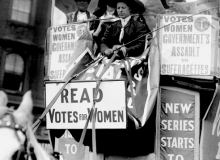
It is 1910, and Britain stands at a crossroads. The Lords have defied the Commons. Suffragettes are breaking windows on Oxford Street. Miners are striking across South Wales. Ireland teeters on the edge of civil war. The Liberal government is taxing land, building dreadnoughts, and constructing the first timid scaffolding of what will one day be called the welfare state. The old certainties of the Victorian age — free trade, laissez-faire, Empire unquestioned — are cracking under the pressure of mass democracy, organised labour, and an industrialising Germany that grows more formidable by the year. Every thinking person in the kingdom has a view. The question is: which political tradition is truly yours?

This quiz places you on the political map of Edwardian Britain through twelve questions drawn from the genuine controversies of the era — the People's Budget, Irish Home Rule, women's suffrage, the arms race, tariff reform, and the rise of Labour. It will tell you whether your instincts belong with the Fabian Socialists remaking society through patient expertise, the New Liberals building the first welfare state, the Gladstonian Liberals clinging to Victorian orthodoxy, the Tariff Reformers dreaming of a protectionist Empire, or the Unionist Conservatives determined to hold the line against the democratic tide. Answer honestly — and as if your answer genuinely matters, because in 1910, it did.


Created by: Nicholas
  1. The House of Lords has rejected the People's Budget. An unelected chamber has blocked the democratic will of the Commons. What is your view? (Lloyd George's 1909 budget taxed land values and wealthy estates to fund old age pensions and social insurance)
  2. Ireland demands Home Rule. The Third Home Rule Bill would grant Dublin a parliament for Irish domestic affairs. Where do you stand?(Context: The Bill passed the Commons three times 1912–14 but was blocked by the Lords. Ulster threatened armed resistance.)
  3. Women have marched, broken windows, chained themselves to railings, and faced imprisonment and force-feeding for the right to vote. How do you respond?(Context: The suffragette movement reached peak militancy 1909–1914 under the WSPU. The NUWSS pursued constitutional methods in parallel.)
  4. Miners, dockers, and railway workers strike simultaneously in what newspapers call the Great Unrest. How should the government respond?(Context: 1910–1914 saw unprecedented industrial militancy; troops were deployed at Tonypandy in 1910.)
  5. India, Nigeria, and other colonial subjects agitate for greater self-governance. What should Britain's response be?(Context: The Indian National Congress pressed for representation; the Morley-Minto reforms of 1909 offered limited concessions.)
  6. The National Insurance Act proposes compulsory contributions from workers, employers, and the state for sickness and unemployment benefits. Your view?(Context: Lloyd George's 1911 Act created the foundations of the welfare state; it was opposed by both doctrinaire Liberals and Conservatives.)
  7. Germany's dreadnought programme threatens British naval supremacy. How should Britain respond?(Context: The Anglo-German naval arms race intensified from 1906; the "We want eight and we won't wait" campaign of 1909 convulsed Parliament.)
  8. A Liberal MP proposes taxing the 'unearned increment' — the rising value of land that landowners have done nothing to create. Your reaction?(Context: Henry George's land value tax ideas had enormous influence on Edwardian reformers across the political spectrum.)
  9. The independent Labour Party seeks to send working men to Parliament to advocate directly for labour's interests. Do you welcome this?(Context: The Labour Representation Committee became the Labour Party in 1906, winning 29 seats on an alliance with the Liberals.)
  10. Should the state provide school meals and medical inspections for the children of the poor?(Context: The 1906 Education (Provision of Meals) Act and 1907 school medical inspections were bitterly contested on grounds of parental responsibility.)
  11. Joseph Chamberlain's Tariff Reform campaign proposes abandoning free trade in favour of imperial preference. What do you make of it?(Context: Chamberlain resigned from the Cabinet in 1903 to campaign full-time for protection; it split the Conservative Party and cost them the 1906 election.)
  12. Should the parliamentary franchise extend to all adult men and women equally, without any property qualification whatsoever?(Context: In 1910, only about 60% of adult men could vote due to property and residency qualifications. No women could vote nationally.)

Rate and Share this quiz on the next page!
You're about to get your result. Then try our new sharing options. smile

What is GotoQuiz? A fun site without pop-ups, no account needed, no app required, just quizzes that you can create and share with your friends. Have a look around and see what we're about.

Home
Search
Trending